
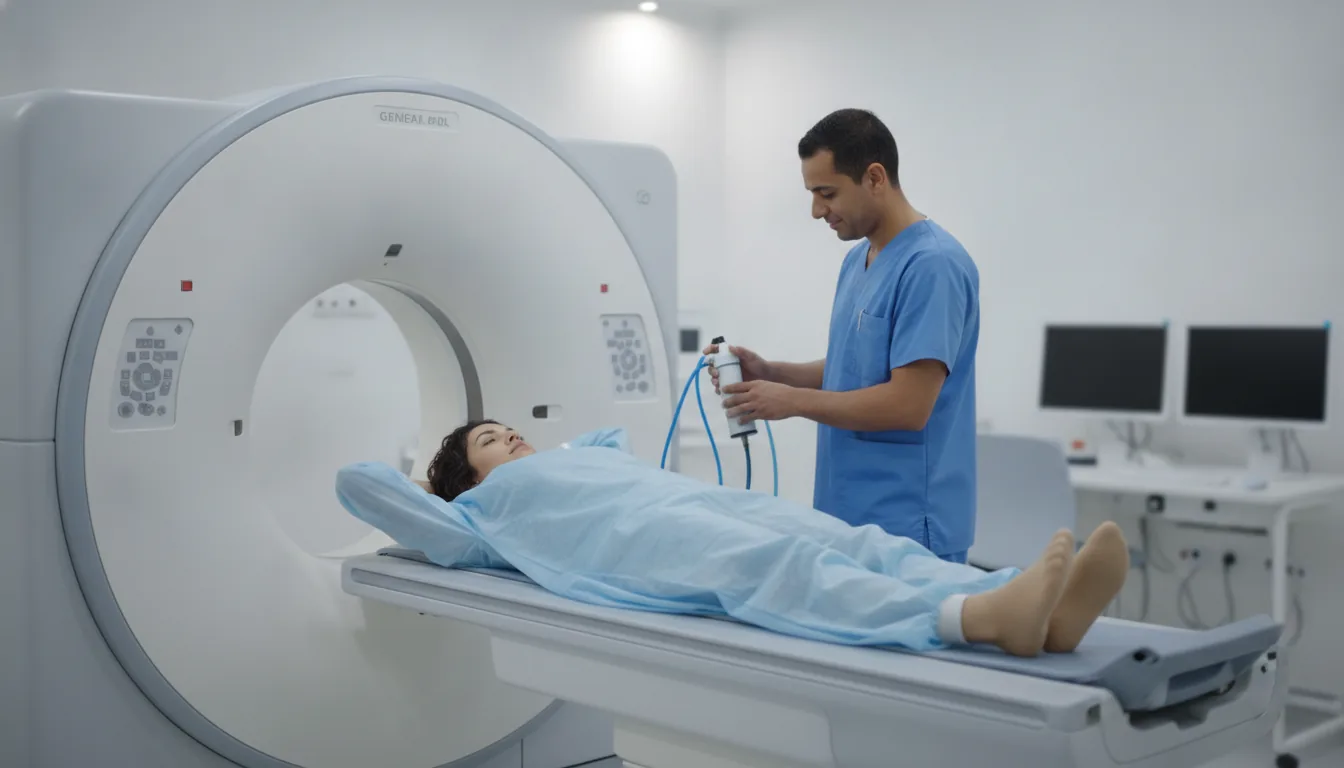
Fistulography and CT fistulography
CT fistulography in Tunis, Tunisia · Centre Urbain Nord
Fistulography and CT fistulography in Tunis: contrast injected into the opening of a fistula to show its path, a test with little discomfort.
What is it?
When is it indicated?
It shows the path of a fistula that appeared after an operation to guide its management.
It looks for where the channel starts and whether it connects with an organ.
It gives the surgeon a map of the channel to be treated.
Preparation
Procedure
You are positioned on the table; the skin around the opening is disinfected
A small soft catheter is placed at the entrance of the fistula, usually without anaesthetic
The contrast agent is injected gently: a feeling of pressure is possible
Images are taken with X-rays or the CT scanner, while you keep still
A dressing is applied; you can resume your activities
Duration
About 15 to 30 minutes in total
Results
The images are analysed by a radiologist, who writes a report. The report is given to you with the images and sent to your doctor, who will explain the results and the next steps. You will be told when to expect it on the day of the examination.
Precautions and contraindications
Your doctor and the radiology team will inform you in detail before the examination. Feel free to ask them your questions.
This information is general and does not replace the advice of your doctor, who chooses the examination suited to your situation.
Related searches
- CT fistulography Tunis
- CT fistulography Tunisia
- CT fistulography in Tunisia