
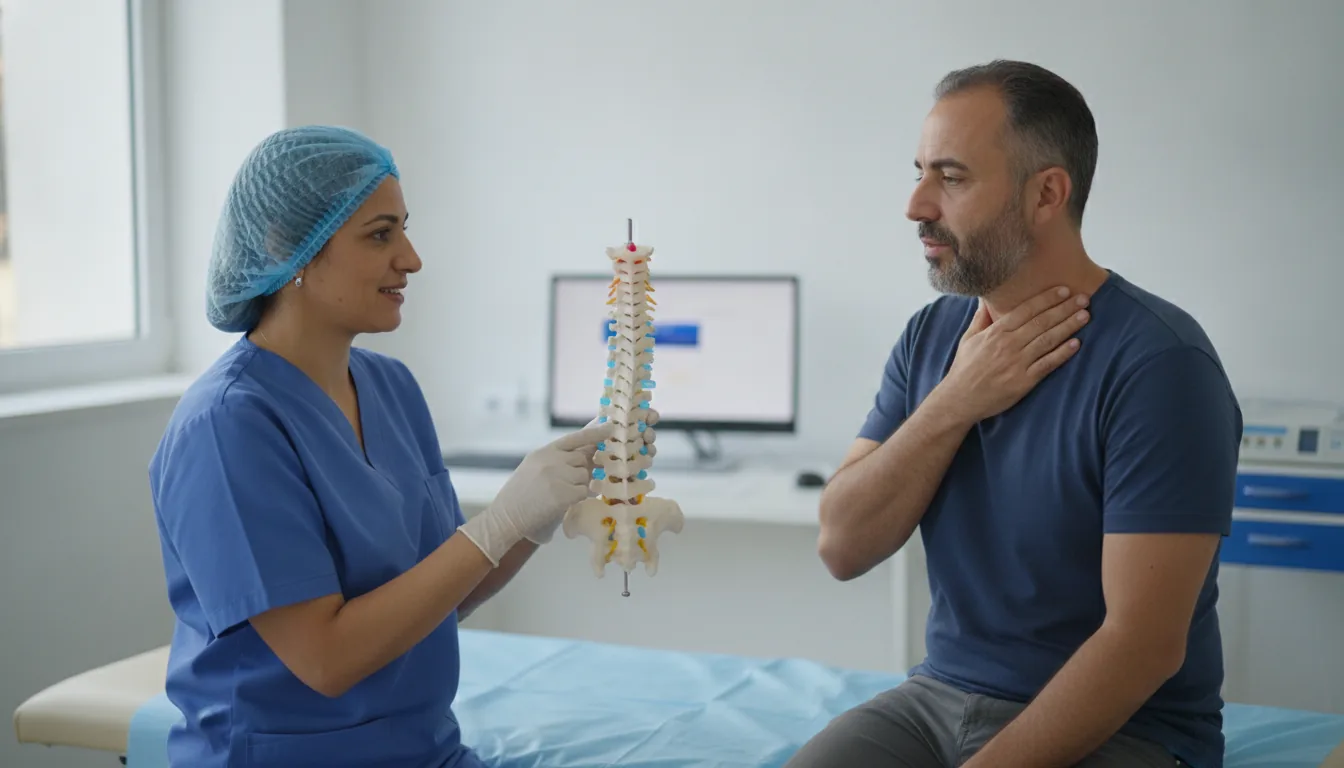
Cervical disc herniation surgery
Surgeries/Neurosurgery/Cervical disc herniation

Cervical disc herniation surgery

Cervical disc herniation in Tunis, Tunisia · Centre Urbain Nord

Removal of a disc herniation in the neck that presses on a nerve or the spinal cord, usually from the front with a cage or disc replacement.

What is it?

The cervical spine, in the neck, also has discs between the vertebrae. A cervical disc herniation can press on a nerve root, causing pain that travels down the arm (cervical radiculopathy), sometimes with tingling and weakness of the hand. More rarely, it presses on the spinal cord itself, which can lead to clumsy hands and difficulty walking. As in the lower back, medical treatment is tried first for isolated arm pain: medication, a temporary collar and physiotherapy. Surgery is offered if the pain persists, if weakness appears, or if the spinal cord is at risk. The operation is usually done through a small incision at the front of the neck, in a skin crease. The surgeon passes between the structures of the neck without cutting them, removes the disc and the herniation, then places either a cage, which allows the two vertebrae to fuse, or an artificial disc, which preserves movement. In some cases, an approach from the back of the neck is preferred. At Clinique Pasteur Tunis, the operation is performed by a neurosurgeon in the operating theatre, with X-ray guidance and a short hospital stay.
Cervical disc herniation surgery

When is it indicated?

Persistent arm pain (cervical radiculopathy)

Pain starting in the neck and travelling down the arm, persisting despite several weeks of treatment.

Weakness of the arm or hand

A muscle losing strength shows that the nerve is suffering and needs to be released.

Compression of the spinal cord

Clumsiness of both hands, unsteady walking: the spinal cord is at risk and surgery should not be delayed.

Herniation confirmed on imaging

The MRI shows a herniation that matches the symptoms.

Preparation

1Cervical MRI, sometimes a CT scan and an electromyogram
2Consultation with the neurosurgeon
3Anaesthetic consultation
4Tell the team about your medication, especially blood thinners
5Nothing to eat for 6 hours before surgery

Procedure

1

General anaesthesia

2

Positioning on the back, with the head tilted slightly back

3

Small horizontal incision at the front of the neck

4

Removal of the disc and herniation under the microscope

5

Insertion of a cage or artificial disc, checked on X-ray

6

Closure, often with a stitch under the skin

Duration

About 1 to 2 hours

Aftercare & Recovery

Patients usually get up the same day or the next day, and the hospital stay is one to three days. Some difficulty swallowing or a slightly hoarse voice are common in the first days and then disappear. A soft collar may be advised for a while. Arm pain often improves quickly. Office work resumes after a few weeks according to the surgeon's advice.

Risks and side effects

Difficulty swallowing or hoarseness, usually temporary
Neck haematoma, rare, closely monitored in the first hours
Infection, which is rare
Wear of the neighbouring disc in the long term
Injury to the spinal cord or a nerve, which is exceptional

These risks remain rare. Your surgeon will inform you in detail before the procedure.

Request a Quote

Contact us to schedule a consultation or receive a personalized quote.

Request a Quote +216 36 402 000

At a glance

Duration: About 1 to 2 hours
Preparation: Required
Dedicated specialist team

Related searches

  • Cervical disc herniation Tunis
  • Cervical disc herniation Tunisia
  • Cervical disc herniation in Tunisia
Request a quote