
Joint washout for septic arthritis
Surgeries/Orthopedic/Septic arthritis

Joint washout for septic arthritis

Septic arthritis in Tunis, Tunisia · Centre Urbain Nord

Emergency washout of an infected joint, by arthroscopy or open surgery, combined with antibiotic treatment.

What is it?

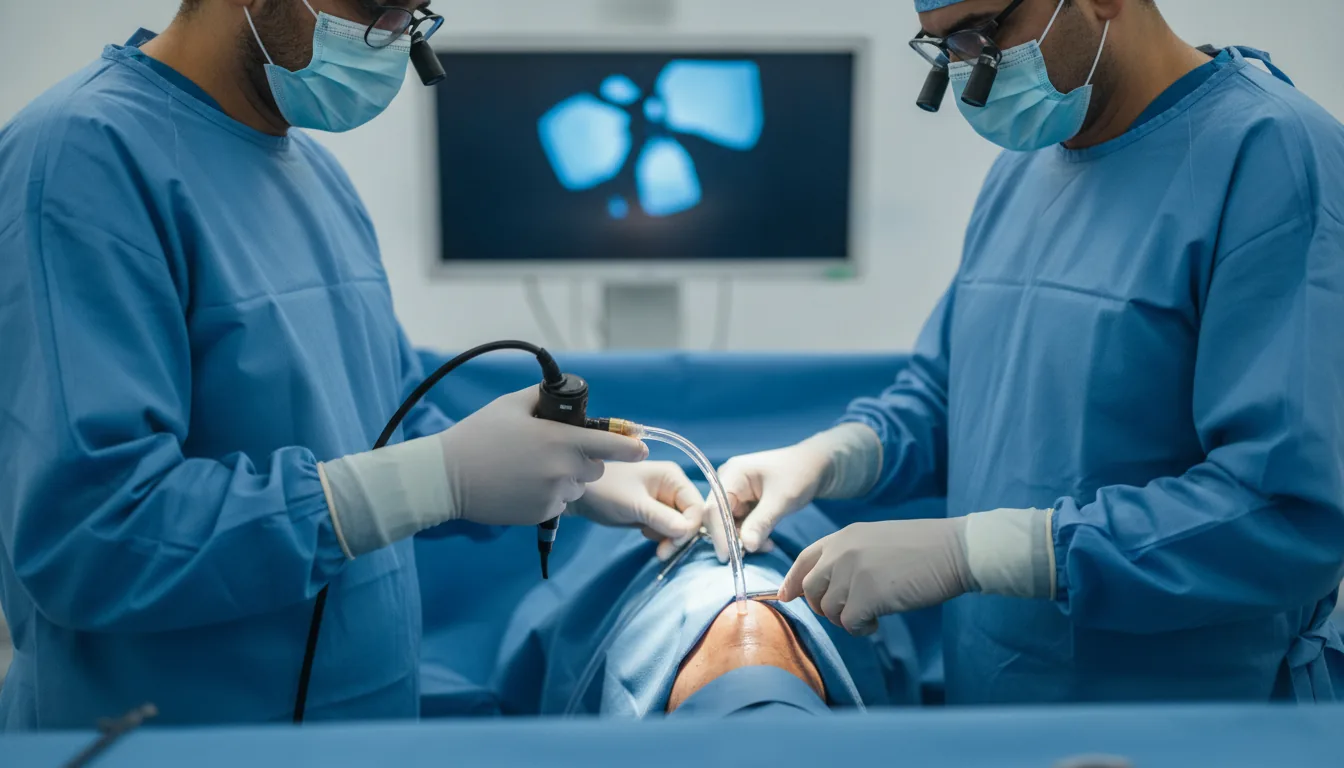
Septic arthritis is an infection of a joint, most often the knee, hip or shoulder. Germs reach the joint through the bloodstream, after an injection, a wound or an operation. The joint suddenly becomes very painful, swollen and warm, and fever is common. It is an emergency: without prompt treatment, the cartilage can be destroyed within a few days. Diagnosis relies on aspirating the joint: the fluid removed is analysed to identify the germ. Treatment combines antibiotics with a washout of the joint, which clears the pus and the germs. The washout is most often done by arthroscopy: the surgeon inserts a camera and rinses the joint thoroughly with saline, removing the infected deposits. Open surgery is sometimes needed, particularly for the hip or when the infection is advanced. A second washout may be required if the infection persists. Infection of a joint replacement needs specific management, discussed with the surgeon. At Clinique Pasteur Tunis, patients are received in the emergency department and the operation is organised promptly by the orthopaedic team, working with physicians on the choice and duration of antibiotics.
Joint washout for septic arthritis

When is it indicated?

Suddenly painful, swollen joint with fever

This should prompt an urgent consultation: a joint infection must be treated quickly.

Joint aspiration showing infection

The fluid taken from the joint confirms the presence of germs or pus.

Infection after an injection or a wound

A procedure in the joint or a nearby wound can occasionally introduce germs.

Infection after joint surgery

This is rare and often requires a prompt washout to save the joint.

Preparation

1Emergency assessment: examination, blood tests, X-rays
2Joint aspiration before antibiotics whenever possible
3Anaesthetic assessment done as an emergency
4Start of antibiotics according to medical advice
5Tell the team about your medication, allergies and illnesses (diabetes in particular)

Procedure

1

General or spinal anaesthesia depending on the joint

2

Insertion of the camera into the joint, or surgical opening

3

Samples taken to identify the germ

4

Thorough saline washout and removal of infected deposits

5

A drain may be left in place

6

Return to the ward with intravenous antibiotics continued

Duration

About 45 minutes to 1 hour 30

Aftercare & Recovery

The hospital stay is usually several days, to make sure the infection is settling (fever, pain, blood tests). Antibiotics are continued for several weeks, first intravenously and then by mouth. Physiotherapy starts as soon as pain allows, to prevent stiffness. Regular follow-up checks that the infection has cleared.

Risks and side effects

Persistent infection requiring a further washout
Stiffness or wear of the joint, especially if the infection was treated late
Side effects of antibiotics
Blood clot in the leg, prevented with appropriate treatment

These risks remain rare. Your surgeon will inform you in detail before the procedure.

Request a Quote

Contact us to schedule a consultation or receive a personalized quote.

Request a Quote +216 36 402 000

At a glance

Duration: About 45 minutes to 1 hour 30
Preparation: Required
Dedicated specialist team

Related searches

  • Septic arthritis Tunis
  • Septic arthritis Tunisia
  • Septic arthritis in Tunisia
Request a quote