
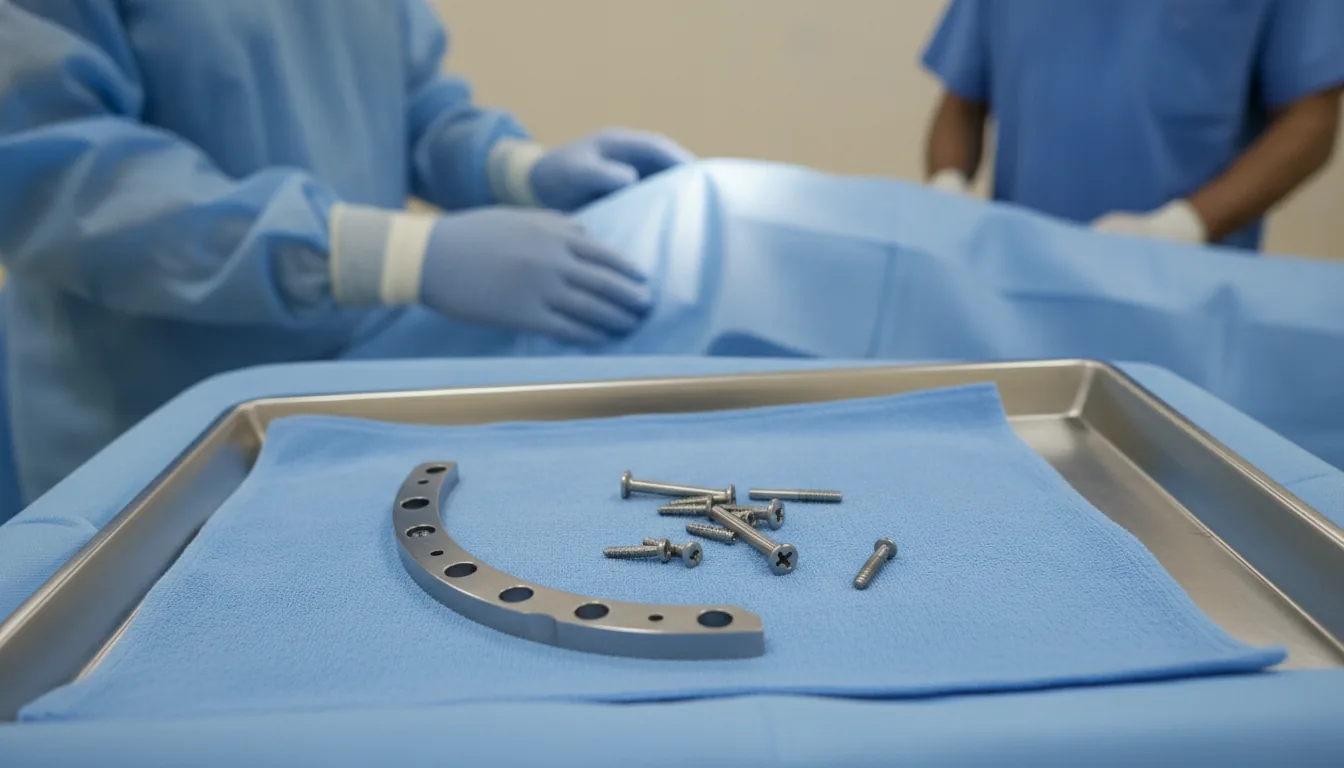
Removal of orthopaedic hardware
Surgeries/Orthopedic/Hardware removal

Removal of orthopaedic hardware

Hardware removal in Tunis, Tunisia · Centre Urbain Nord

Removal of screws, plates, nails or wires placed during a previous operation, once the bone has healed.

What is it?

After a fracture, the bone is often fixed with metal implants: screws, plates, nails or wires. This hardware holds the bone in the correct position while it heals. Once the fracture has healed, it no longer serves a purpose. Removal is not routine: many patients keep their hardware for life without any trouble. It is offered when the hardware is bothersome (pain, rubbing under the skin, difficulty wearing shoes), when temporary wires were used, in children and in some young adults, or when there is a complication such as infection. The operation is usually done through the old scar. The surgeon exposes the hardware and removes it. It is often simpler than the original fixation, but can be more delicate when the implants are old and covered by bone. At Clinique Pasteur Tunis, hardware removal is most often carried out as a day case. The surgeon first checks on X-rays that the bone has healed properly and explains the precautions to take after removal.
Removal of orthopaedic hardware

When is it indicated?

Bothersome or painful hardware

A plate or screw can rub under the skin, irritate a tendon or make it hard to wear shoes.

Temporary wires or fixation

Some fixation is planned from the start to be removed after a few weeks.

Young patient

In children and in some young adults, removal may be advised once the bone has healed.

Infection around the hardware

In case of infection, removing the hardware helps healing, together with antibiotics.

Broken or displaced hardware

A screw that has moved or a broken part may need to be removed.

Preparation

1Recent X-rays to confirm that the bone has healed
2If possible, bring the report of the original operation
3Anaesthetic consultation
4Nothing to eat for 6 hours before surgery
5Arrange for someone to take you home

Procedure

1

Admission to the day surgery unit

2

General anaesthesia or regional anaesthesia of the limb

3

Incision, usually through the old scar

4

Removal of the screws, plate, nail or wires

5

X-ray check if needed

6

Closure and dressing

Duration

30 minutes to 1 hour 30 depending on the hardware

Aftercare & Recovery

Most patients go home the same day. The wound needs the usual care for about ten days. The bone keeps the holes left by the screws for a few weeks: avoid strenuous efforts and sports with a risk of falling for the period advised by your surgeon.

Risks and side effects

Haematoma or wound infection, which are uncommon
Difficulty removing an old screw, which may then be left in place
Fracture of the weakened bone in the weeks after removal, which is rare
Injury to a nearby nerve or blood vessel, which is exceptional

These risks remain rare. Your surgeon will inform you in detail before the procedure.

Request a Quote

Contact us to schedule a consultation or receive a personalized quote.

Request a Quote +216 36 402 000

At a glance

Duration: 30 minutes to 1 hour 30 depending on the hardware
Preparation: Required
Dedicated specialist team

Related searches

  • Hardware removal Tunis
  • Hardware removal Tunisia
  • Hardware removal in Tunisia
Request a quote