
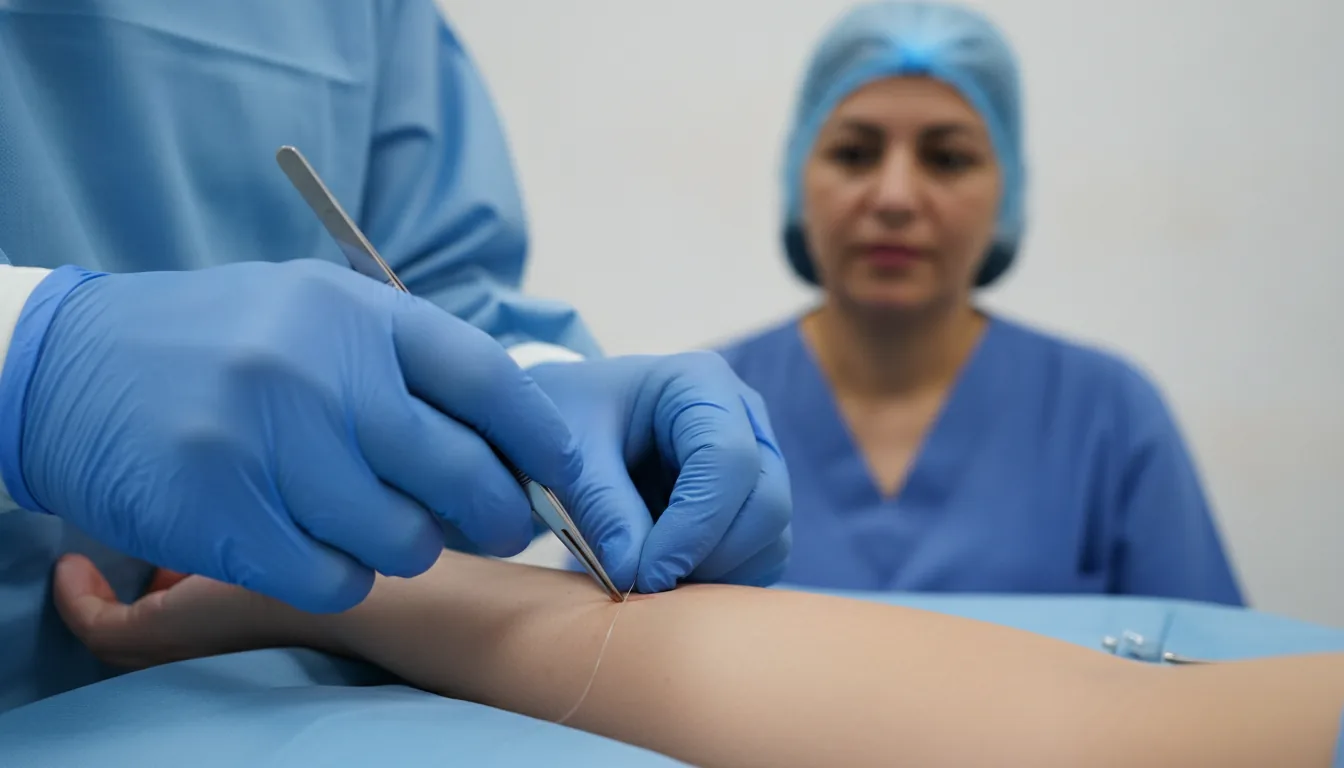
Scar revision (unsightly scar, keloid)
Scar revision in Tunis, Tunisia · Centre Urbain Nord
Improvement of a wide, thick, contracted or keloid scar through surgical revision and associated treatments.
What is it?
When is it indicated?
A scar that has widened or thickened can be revised to obtain a finer, more discreet line.
A scar that spreads beyond its borders, itches and grows needs combined treatment to limit recurrence.
A scar band on a finger, elbow or the neck can hinder movement; a plasty releases the skin.
A facial scar that does not follow the natural lines can be repositioned so that it blends in better.
Preparation
Procedure
Local anaesthesia in most cases, general for large areas
Removal of the damaged scar
Plasty (Z-plasty or other) if the scar needs to change direction
Fine suturing in several layers, without tension
For a keloid: corticosteroid injection at the end of the procedure depending on the case
Dressing and care instructions
Duration
30 minutes to 1.5 hours depending on the scar
Aftercare & Recovery
Discharge is on the same day in most cases. Stitches are removed after one to two weeks depending on the area. The new scar must be protected from the sun and massaged as advised by the surgeon. It continues to change for a year or more. For a keloid, close follow-up and additional treatments are often needed.
Risks and side effects
These risks remain rare. Your surgeon will inform you in detail before the procedure.
Coming from abroad?
The clinic supports international patients: personalised quote, stay planning, help with accommodation and transfers, communication in French, English and Arabic.
Request a Quote
Contact us to schedule a consultation or receive a personalized quote.
Request a Quote +216 36 402 000At a glance
Read also

Cosmetic Surgery in Tunisia: Planning Your Project
Cosmetic surgery is prepared well before the day of the procedure. Here are the steps of a calmly planned project in Tunis, from the first consultation to follow-up after you return home.
Read the article
Otoplasty in Tunisia: Prominent Ears, Procedure and Recovery
Otoplasty corrects prominent ears in children and adults alike. Here is how this ear surgery is prepared and performed, and what recovery looks like.
Read the articleRelated searches
- Scar revision Tunis
- Scar revision Tunisia
- Scar revision in Tunisia