
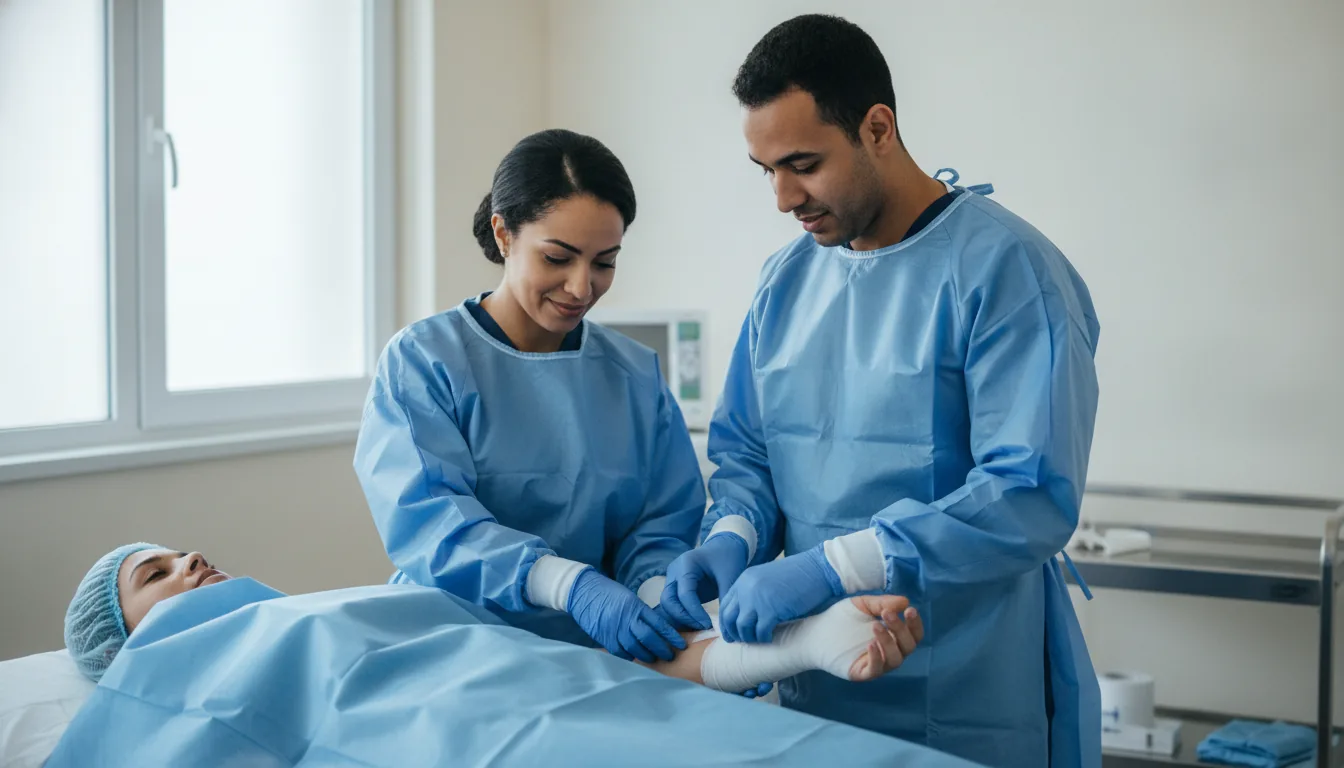
Burn surgery (excision and grafting)
Burn surgery in Tunis, Tunisia · Centre Urbain Nord
Surgical treatment of deep burns by removing the burnt tissue and skin grafting, followed by treatment of the after-effects.
What is it?
When is it indicated?
A burn that shows no sign of healing after about ten days is often deep and calls for excision and grafting.
In these areas, poor-quality healing is very troublesome; early surgery protects function.
A scar that pulls and limits the opening of a finger, the elbow or the neck can be released surgically.
Hypertrophic scars that itch or cause discomfort can be improved by surgery and associated treatments.
Preparation
Procedure
General or regional anaesthesia
Removal of burnt tissue down to healthy tissue
Harvesting of skin from a healthy area
Placement of the graft on the excised area
Pressure dressing and, if needed, a splint
Monitoring and regular dressings during the hospital stay
Duration
1 to 3 hours depending on the surface area
Aftercare & Recovery
The hospital stay lasts from a few days to a few weeks depending on the extent. Dressings are changed regularly. After healing, pressure garments, moisturising creams and rehabilitation are often needed for several months. Scars continue to change over one to two years, with regular follow-up.
Risks and side effects
These risks remain rare. Your surgeon will inform you in detail before the procedure.
Coming from abroad?
The clinic supports international patients: personalised quote, stay planning, help with accommodation and transfers, communication in French, English and Arabic.
Request a Quote
Contact us to schedule a consultation or receive a personalized quote.
Request a Quote +216 36 402 000At a glance
Read also
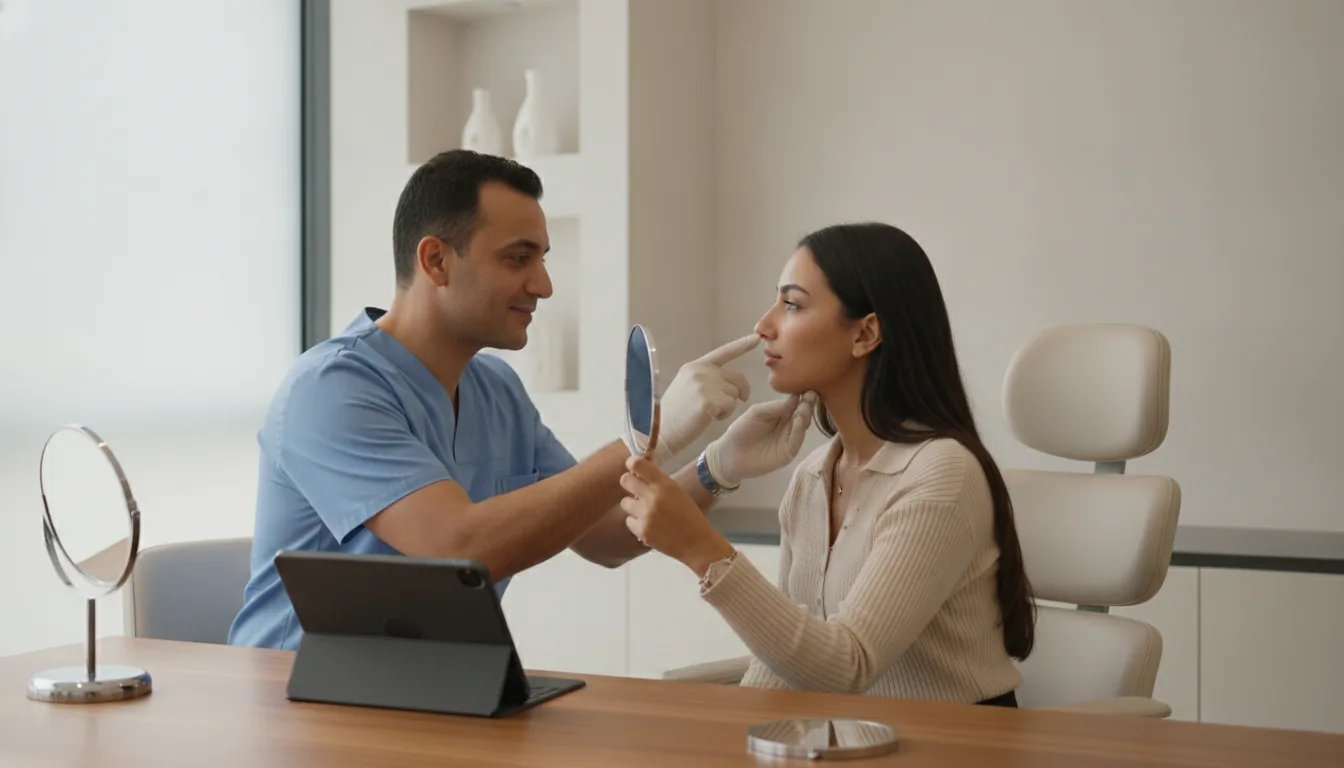
Cosmetic Surgery in Tunisia: Planning Your Project
Cosmetic surgery is prepared well before the day of the procedure. Here are the steps of a calmly planned project in Tunis, from the first consultation to follow-up after you return home.
Read the article
Otoplasty in Tunisia: Prominent Ears, Procedure and Recovery
Otoplasty corrects prominent ears in children and adults alike. Here is how this ear surgery is prepared and performed, and what recovery looks like.
Read the articleRelated searches
- Burn surgery Tunis
- Burn surgery Tunisia
- Burn surgery in Tunisia