
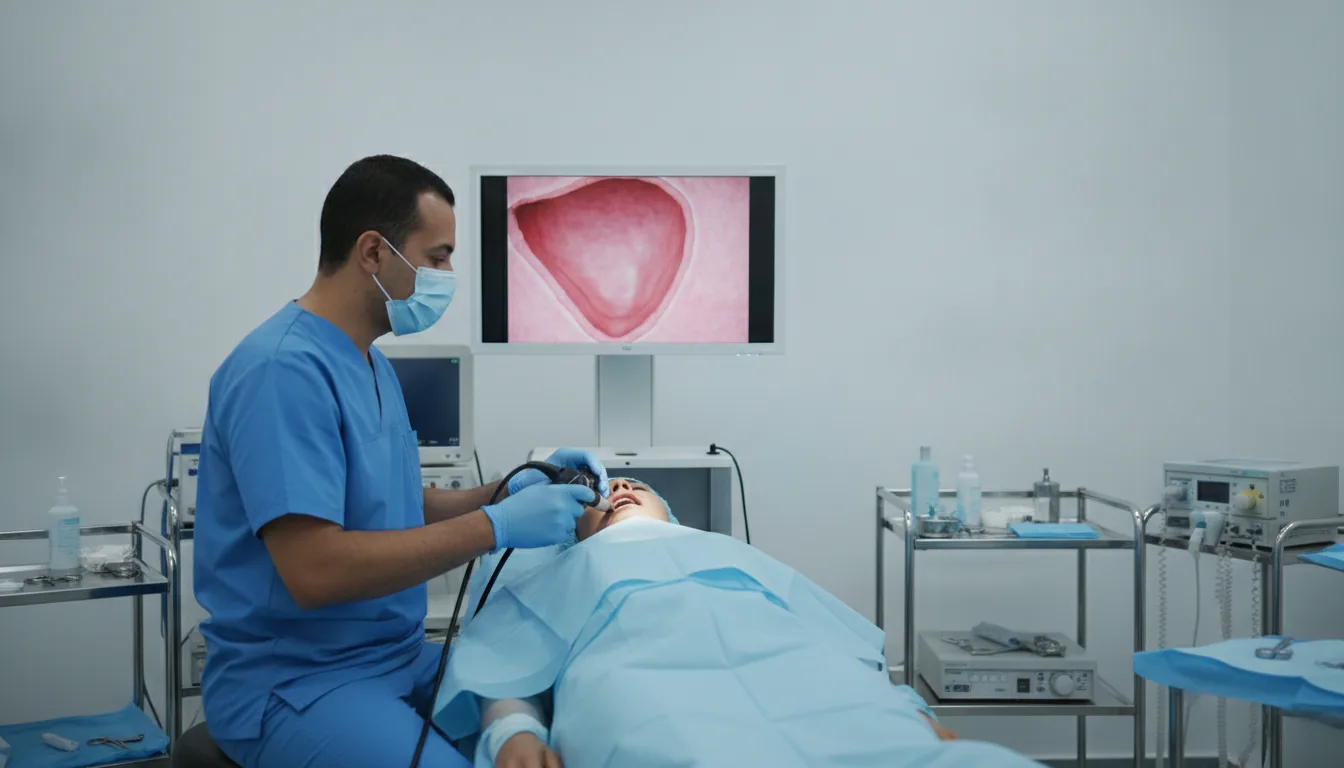
Oesophageal variceal band ligation
Oesophageal variceal ligation in Tunis, Tunisia · Centre Urbain Nord
Endoscopic treatment of varices in the oesophagus by placing small elastic bands, to prevent or stop bleeding.
What is it?
When is it indicated?
In an emergency, ligation stops the bleeding from a ruptured varix; it is the reference procedure.
When varices are large or at risk, treating them before they bleed reduces the risk of haemorrhage.
After a first bleed, repeated sessions make the varices disappear to avoid further bleeding.
In patients followed for liver disease, surveillance endoscopy allows varices to be treated as soon as they need it.
Preparation
Procedure
Sedation or general anaesthesia
Passage through the mouth of the endoscope fitted with the ligation device
Identification of the varices and their level of risk
Suction of each varix into the cap and placement of an elastic band at its base
Several ligations during the same session
Monitoring in the recovery room, then on the ward
Duration
15 to 30 minutes per session
Aftercare & Recovery
For a planned session, discharge is on the same day or the next day; after bleeding, the hospital stay is longer. Difficulty swallowing or pain behind the breastbone is common for one to two days; a liquid diet followed by lukewarm, soft food is advised. A new session is scheduled a few weeks later, until the varices have disappeared.
Risks and side effects
These risks remain rare. Your surgeon will inform you in detail before the procedure.
Request a Quote
Contact us to schedule a consultation or receive a personalized quote.
Request a Quote +216 36 402 000At a glance
Related searches
- Oesophageal variceal ligation Tunis
- Oesophageal variceal ligation Tunisia
- Oesophageal variceal ligation in Tunisia