
Percutaneous endoscopic gastrostomy (PEG)
Surgeries/Endoscopic/Gastrostomy (PEG)

Percutaneous endoscopic gastrostomy (PEG)

Gastrostomy (PEG) in Tunis, Tunisia · Centre Urbain Nord

Endoscopic placement of a feeding tube into the stomach, through the abdominal wall, when eating by mouth is no longer possible.

What is it?

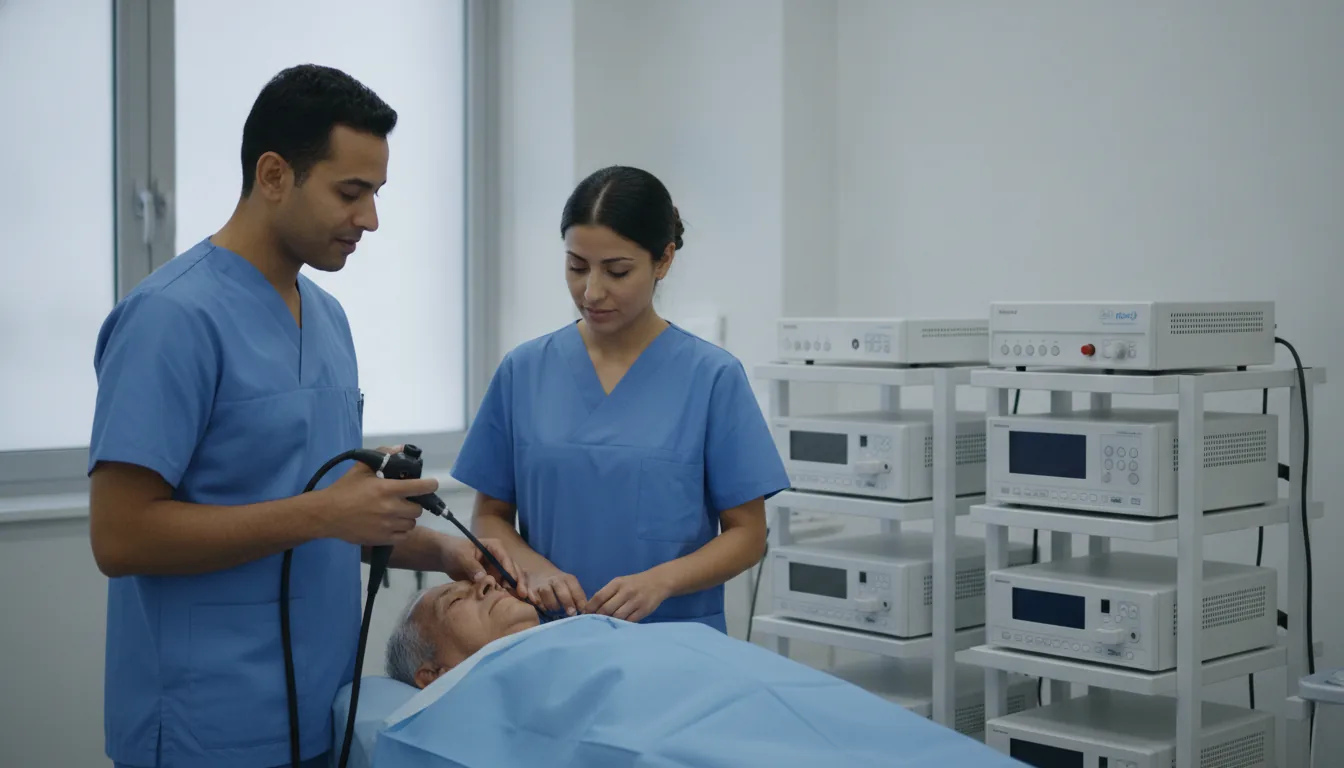
Percutaneous endoscopic gastrostomy, often called PEG, involves placing a small flexible tube that connects the stomach directly to the outside, through the abdominal wall. It allows nutrition, water and certain medicines to be given when the patient can no longer swallow properly or sufficiently over a long period. The procedure is carried out under sedation or anaesthesia. An endoscope is passed through the mouth into the stomach; its light, visible through the skin, helps choose the right puncture point. A small incision is made in the abdomen, and the tube is placed under camera guidance. It is held in place by a disc inside the stomach and another on the outside. Gastrostomy is offered when tube feeding is expected to last several weeks or longer: swallowing difficulties after a stroke, neurological disease, cancer of the throat or oesophagus, severe malnutrition. It is more comfortable than a tube passed through the nose and can be removed if swallowing returns to normal. The decision is made with the patient and their family. At Clinique Pasteur Tunis, percutaneous endoscopic gastrostomy is performed in the endoscopy suite by a gastroenterologist, with a short period of monitoring and training for the patient and those close to them in caring for the tube.
Percutaneous endoscopic gastrostomy (PEG)

When is it indicated?

Swallowing difficulties after a stroke

When swallowing becomes dangerous or impossible after a stroke, the tube provides safe nutrition while awaiting possible recovery.

Progressive neurological disease

Some diseases of the nerves or muscles eventually affect swallowing; gastrostomy helps maintain nutritional status.

Cancer of the throat or oesophagus

Before or during treatment, the tube makes it possible to continue eating well when food has difficulty passing.

Severe and prolonged malnutrition

When eating by mouth is not enough over a long period, the tube supplements intake.

Preparation

1Consultation with the doctor and discussion with the patient and their family
2Blood tests including clotting tests
3Adjusting or stopping anticoagulants as instructed
4Anaesthesia consultation
5Fast for 6 hours before the procedure
6Preventive antibiotic given before the procedure

Procedure

1

Settling in the endoscopy suite and sedation or anaesthesia

2

Passage of the endoscope through the mouth into the stomach

3

Locating the puncture point using the light visible through the skin

4

Disinfection of the skin, local anaesthesia and a small incision

5

Placement of the tube under camera guidance

6

Securing the tube and dressing

Duration

About 20 to 40 minutes

Aftercare & Recovery

Monitoring usually lasts one day or one night. Feeding through the tube most often resumes within hours, as instructed by the doctor. The patient and their relatives learn how to care for the skin around the tube and how to use it. A follow-up is planned, and the tube can be changed or removed later.

Risks and side effects

Pain or discomfort at the puncture site during the first few days
Infection of the skin around the tube, usually easily treated
Leakage around the tube or a blocked tube
Bleeding or perforation, rare complications closely monitored

These risks remain rare. Your surgeon will inform you in detail before the procedure.

Request a Quote

Contact us to schedule a consultation or receive a personalized quote.

Request a Quote +216 36 402 000

At a glance

Duration: About 20 to 40 minutes
Preparation: Required
Dedicated specialist team

Related searches

  • Gastrostomy (PEG) Tunis
  • Gastrostomy (PEG) Tunisia
  • Gastrostomy (PEG) in Tunisia
Request a quote