
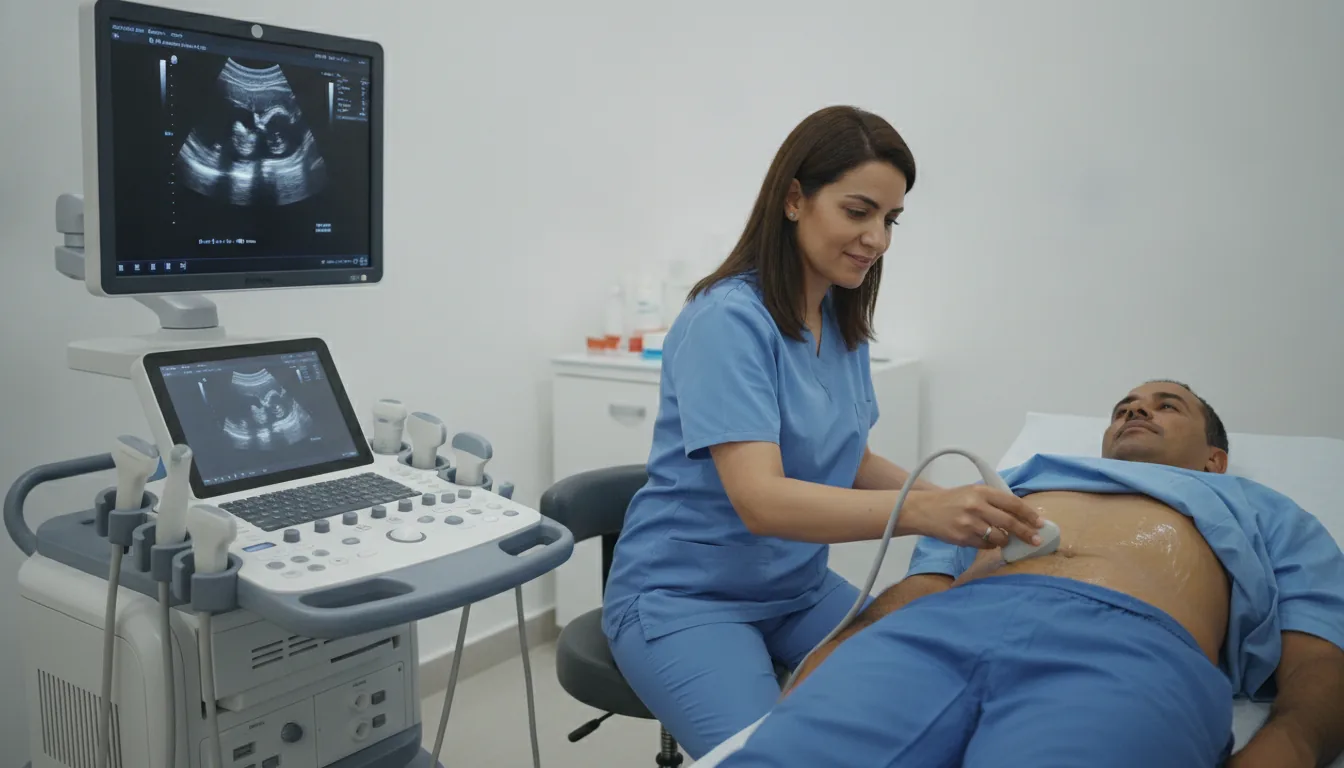
Venous Doppler ultrasound of the limbs (DVT, varicose veins, CHIVA mapping)
Diagnostic Testing/Cardiac/Venous Doppler of the limbs

Venous Doppler ultrasound of the limbs (DVT, varicose veins, CHIVA mapping)

Venous Doppler of the limbs in Tunis, Tunisia · Centre Urbain Nord

Venous Doppler ultrasound in Tunis: checks for deep vein thrombosis, varicose vein assessment and CHIVA mapping before surgery, no X-rays.

What is it?

A venous Doppler ultrasound examines the veins of the legs or arms: the deep veins, inside the muscles, and the superficial veins, under the skin. It shows whether a vein is blocked by a clot and whether blood is flowing in the right direction. Depending on the referral, it is performed by a cardiologist, an angiologist (a doctor specialising in blood vessels) or a radiologist. If deep vein thrombosis is suspected (a swollen, painful, warm leg), this test must be done urgently, because a clot can break off and travel to the lungs. It is also used to assess varicose veins before any treatment: it identifies the veins whose valves no longer work (reflux). CHIVA marking is a detailed map of the veins, done standing and then lying down, with marks drawn on the skin with a felt pen; it prepares for vein-sparing varicose vein surgery (the CHIVA method) and is done shortly before the operation. When the doctor requests it, the arteries and veins of the same limb can be examined in the same session (arterial and venous Doppler).
Venous Doppler ultrasound of the limbs (DVT, varicose veins, CHIVA mapping)

When is it prescribed?

Suspected deep vein thrombosis

A swollen, painful or warm leg must be examined without delay: the test confirms or rules out a clot in a deep vein.

Varicose veins, heavy legs, swollen ankles

It shows which veins are affected and where the reflux comes from, to choose the right treatment.

Assessment before varicose vein treatment

Before surgery, laser or sclerotherapy, it provides the map of the veins to be treated.

CHIVA marking before vein-sparing surgery

The mapping and the drawing on the skin guide the surgeon during the CHIVA procedure.

Follow-up of a treated thrombosis

It checks how the clot evolves under treatment and helps the doctor decide how long to continue it.

Preparation

1Wear clothes that are easy to remove or roll up over the area to be examined
2No fasting or special preparation is needed, unless you are told otherwise when booking
3For a varicose vein assessment or CHIVA marking: do not apply cream to your legs on the day, and come without compression stockings if possible
4Bring a list of your medicines, especially blood thinners; do not stop them without medical advice
5Bring your referral, previous tests (Doppler ultrasound, CT scan, MRI, angiography) and any relevant reports

How the exam is performed

1

You lie on your back; for varicose veins, part of the test is done standing

2

A gel is applied to the skin to help the ultrasound pass through; it may feel a little cold

3

The probe follows the veins; the doctor presses at times to check that they compress normally

4

The doctor may squeeze your calf or ask you to strain as if coughing, to look for reflux

5

For CHIVA marking, the path of the veins is drawn on the skin with a felt pen: do not wash it off before the operation

6

The gel is wiped off at the end; you can return to your usual activities straight away

Duration

About 20 to 30 minutes; longer for full mapping, CHIVA marking or a combined arterial and venous study

Results

The doctor performing the test (cardiologist, angiologist or radiologist, depending on the referral) analyses the images and measurements during the examination, then writes a report. The report is given to you and sent to your doctor, who will explain the results and the next steps. You will be told when to expect it on the day of the examination.

Risks and side effects

No X-rays: Doppler ultrasound uses only ultrasound waves
No injection or contrast agent
Painless; the pressure of the probe may be tender on a swollen or painful leg
Standing for a while can be tiring: tell the team if you feel unwell
Can be done during pregnancy, as ultrasound is not radiation

These risks remain rare. Your physician will explain them in detail before the exam.

Request a quote

Request your quote online or call us on the number below:

Request a Quote +216 36 402 034

At a glance

Duration: About 20 to 30 minutes; longer for full mapping, CHIVA marking or a combined arterial and venous study
Preparation: Required

Related searches

  • Venous Doppler of the limbs Tunis
  • Venous Doppler of the limbs Tunisia
  • Venous Doppler of the limbs in Tunisia
Request a quoteBook an appointment