
Polysomnography (full overnight sleep study)
Polysomnography in Tunis, Tunisia · Centre Urbain Nord
Polysomnography in Tunis: a full overnight sleep recording (sleep apnoea, daytime sleepiness, severe insomnia, abnormal movements, narcolepsy).
What is it?
When is it prescribed?
Loud snoring, pauses in breathing noticed by others, waking with a start or feeling tired on waking suggest breathing stops during the night.
Falling asleep easily while driving, at work or while reading should prompt a search for a sleep disorder.
When insomnia resists treatment or seems linked to another disorder, the recording helps understand what is disturbing sleep.
Moving legs, restlessness, acting out dreams, sleepwalking: the test records what happens during the night.
Irresistible sleep attacks during the day, sometimes with sudden loss of muscle tone, lead to this recording, often completed by other tests the next day depending on the doctor's advice.
Preparation
How the exam is performed
You are shown to a quiet room and change into your pyjamas
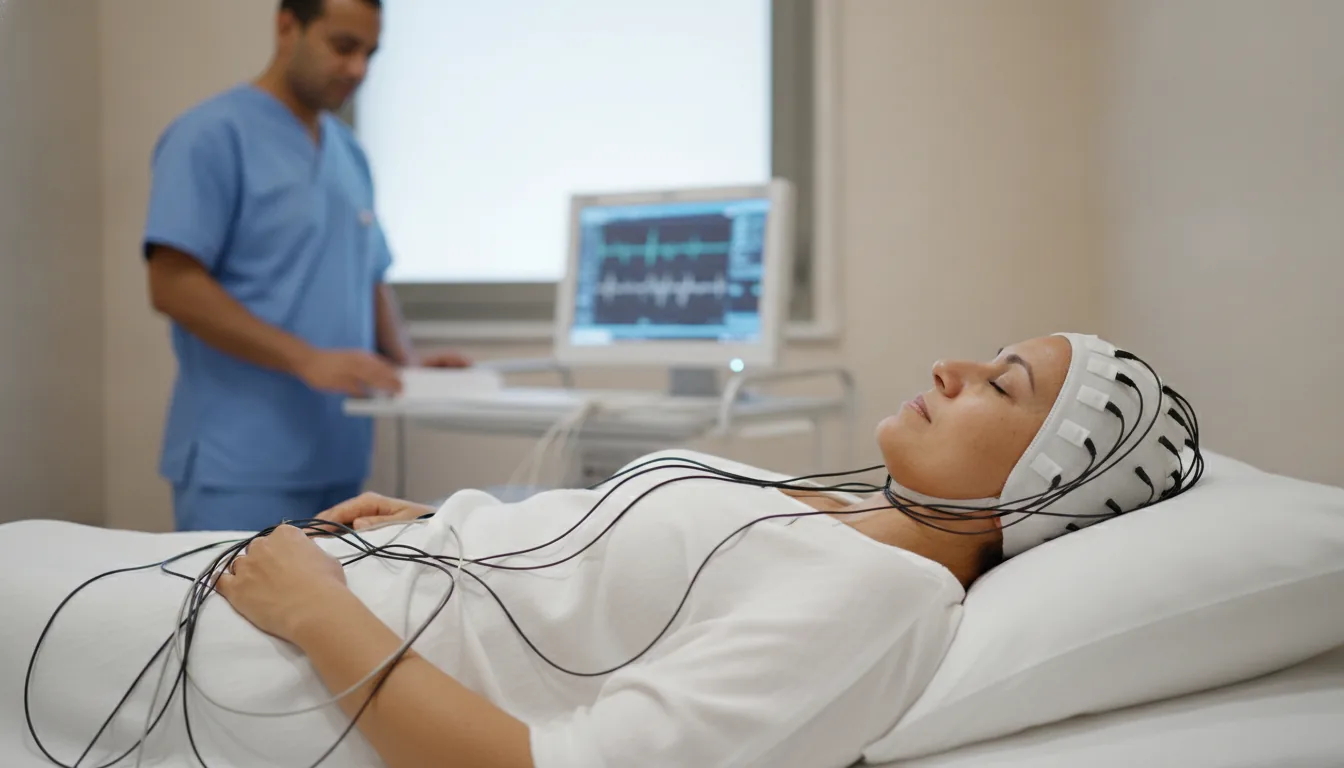
The sensors are fitted: small electrodes stuck on the scalp, face and chin, belts around the chest and abdomen, a small tube under the nose, a finger clip for oxygen, electrodes on the chest and legs
Fitting is painless and takes a while; a few simple tests check that everything works (closing your eyes, looking left and right, breathing deeply)
You go to bed at your usual time and sleep as naturally as possible; you can get up to go to the toilet by letting the team know
Recording continues all night; you are monitored according to how the unit is organised
In the morning, the sensors are removed and you can go home and resume your activities
Duration
One full night, from the evening until the morning, including fitting and removal of the sensors
Results
The night's recording is long: it is analysed in detail by a doctor, who writes a report. The report is given to you and sent to your doctor, who will explain the results and any treatment. You will be told when to expect it on the day of the examination.
Risks and side effects
These risks remain rare. Your physician will explain them in detail before the exam.
Request a quote
Request your quote online or call us on the number below:
Request a Quote +216 36 402 000At a glance
Related searches
- Polysomnography Tunis
- Polysomnography Tunisia
- Polysomnography in Tunisia