
Home respiratory polygraphy (home sleep apnoea test)
Diagnostic Testing/Neurophysiological/Respiratory polygraphy

Home respiratory polygraphy (home sleep apnoea test)

Respiratory polygraphy in Tunis, Tunisia · Centre Urbain Nord

Respiratory polygraphy in Tunis: overnight recording of breathing at home to screen for sleep apnoea.

What is it?

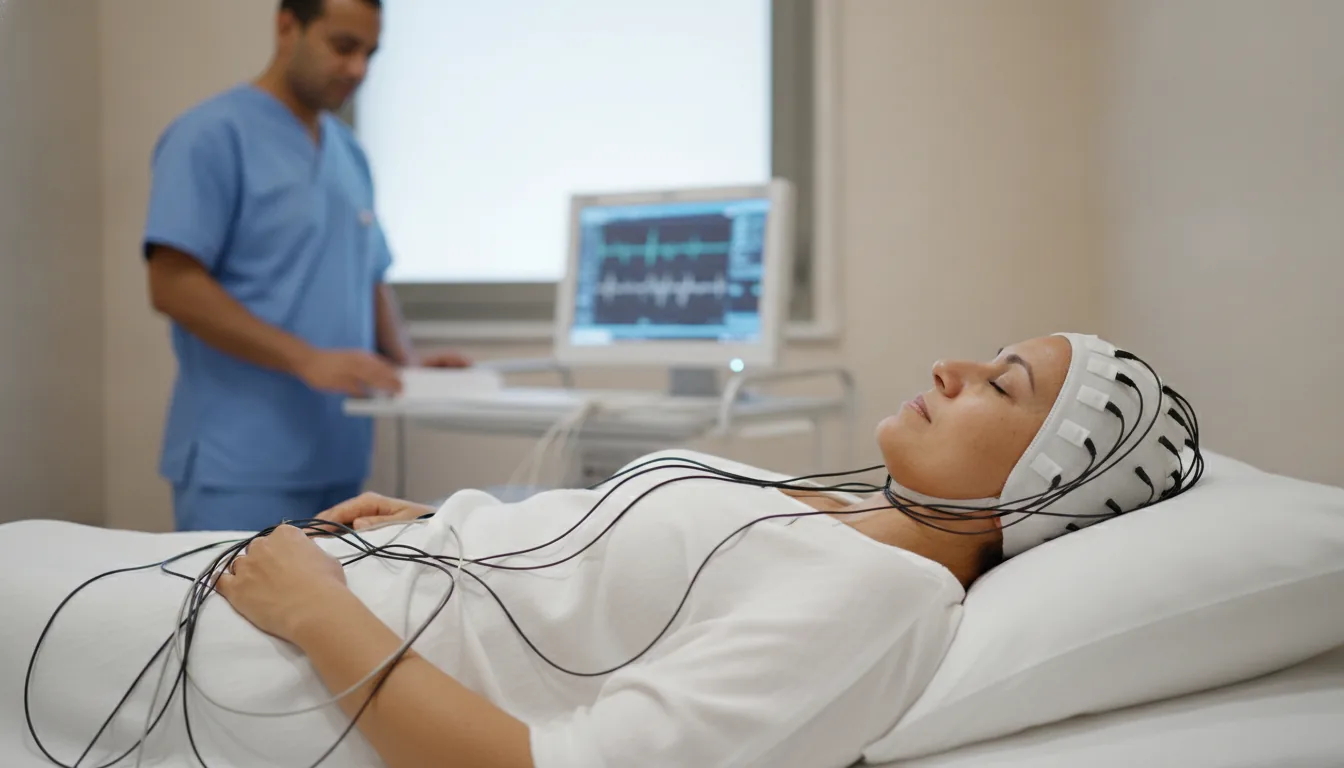
Respiratory polygraphy is a simplified sleep recording focused on breathing. A small device is fitted at the clinic, then you spend the night at home, in your own bed, and bring it back the next day. The device records airflow through the nose (small tube), chest and abdominal movements (belts), blood oxygen level and pulse (finger clip), snoring and body position. It detects pauses in breathing (apnoeas) and drops in oxygen. It is requested to screen for sleep apnoea in people who snore, whose breathing pauses have been noticed by others, or who feel sleepy during the day. It is less complete than polysomnography: it does not record brain activity (no EEG) and therefore cannot study the stages of sleep. Depending on the results, the doctor may suggest a polysomnography as well.
Home respiratory polygraphy (home sleep apnoea test)

When is it prescribed?

Loud, regular snoring

Heavy snoring, especially with other signs, prompts a search for sleep apnoea.

Pauses in breathing during sleep

When others notice breathing stops, the recording counts them and measures their effect on oxygen.

Daytime sleepiness or tiredness

Tiredness on waking, morning headaches or falling asleep during the day may be linked to apnoeas.

High blood pressure, excess weight or heart disease

In these people, apnoeas are more common and screening helps the doctor adapt their care.

Preparation

1Arrive at the time given, usually in the late afternoon or evening, in comfortable clothes
2Shower before you come; do not apply cream or lotion to your face and body, so that the sensors stick well
3Remove nail varnish or false nails from at least one finger (for the oxygen clip)
4Avoid coffee, tea, cola, energy drinks and alcohol from the afternoon onwards, and do not nap that day
5Keep taking your usual medicines unless your doctor advises otherwise; tell us about any sleeping pills or sedatives and bring a list of your medicines
6Bring your referral, any relevant reports and, if you were given one, your completed sleep questionnaire

How the exam is performed

1

At the clinic, the device is fitted and the team shows you how to switch it on and adjust the sensors

2

You go home with the device and spend a normal evening

3

You go to bed at your usual time; the nasal tube, belts and finger clip stay in place all night

4

If a sensor comes off during the night, put it back as you were shown

5

The next day, you remove the device and bring it back at the time given

Duration

One night at home; fitting at the clinic and returning the device take a few minutes

Results

The night's recording is long: it is analysed in detail by a doctor, who writes a report. The report is given to you and sent to your doctor, who will explain the results and any treatment. You will be told when to expect it on the day of the examination.

Risks and side effects

Painless, with no X-rays or injection
The nasal tube and belts may feel a little awkward at first; most people get used to them quickly
People often sleep a little less well than at home with the sensors: this is normal and the doctor takes it into account
If a sensor was off for too long, the recording may need to be repeated

These risks remain rare. Your physician will explain them in detail before the exam.

Request a quote

Request your quote online or call us on the number below:

Request a Quote +216 36 402 000

At a glance

Duration: One night at home; fitting at the clinic and returning the device take a few minutes
Preparation: Required

Related searches

  • Respiratory polygraphy Tunis
  • Respiratory polygraphy Tunisia
  • Respiratory polygraphy in Tunisia
Request a quoteBook an appointment